If you're researching how to start a box truck business, start with the freight you can realistically secure—not the truck you can get financed.
From the recruiting side, I've seen the gap between advertised gross and what remains after deductions. I've also seen how company-supplied mileage and revenue figures get repeated before anyone checks whether they add up. Those problems matter even more when you're paying for the truck.
Starting a box truck business means choosing your work, checking the costs, arranging the right operating setup, and keeping enough cash to survive a disappointing month.
My starting test is simple: can you identify the customer, explain why they'll hire you, and show what's left after doing the work? If the answer depends entirely on somebody else's best-week screenshot, you're not ready to buy.
Is a Box Truck Business Actually Worth It? (The Honest Version)
Is a box truck business profitable? It can be. But owning a truck and buying yourself a demanding driving job are not automatically the same as building a profitable business.
Among the box truck business ideas I'd investigate are store-to-customer deliveries, scheduled replenishment for local businesses, and regional palletized freight. I'd narrow that list by asking actual customers about volume, equipment, payment terms, and service expectations—not by choosing whichever niche promises the biggest gross.
So, how much can you make with a box truck? Start by separating three numbers: freight revenue, cash remaining after operating outflows, and the return left after allowing for your own work.
In a hypothetical month, $16,000 collected minus $12,500 in operating payments and reserves leaves $3,500. That is not automatically $3,500 of business profit. It still has to support your labor, taxes, and anything omitted from the calculation.
If you value your driving and administrative work at $4,000 that month, the model hasn't even covered your target compensation.
I've heard enough impressive recruiting figures to prefer an anonymized settlement and a complete cost breakdown over a promise. Our Box Truck Owner-Operator Pay guide separates business revenue from personal earnings; here, the question is whether ownership makes sense at all.
The Real Startup Costs
There isn't an honest universal startup price. Separate money spent getting ready from money that must remain available afterward—the SBA likewise distinguishes one-time and recurring expenses.
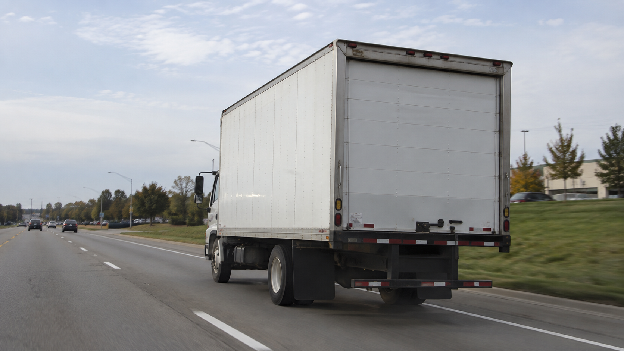
For a concrete equipment reference, Penske listed a used 2019 Hino 268 with a 26-foot body at $41,500, with 258,246 miles, before taxes and fees. That's one asking price, not a market average or a recommendation.
Here is an illustrative financed-truck launch budget, using that price:
| Item | Example cash requirement |
|---|---|
| Truck down payment, assuming 20% | $8,300 |
| Insurance deposit, taxes, registration, process-agent filing, inspection, initial service and equipment—assumed combined allowance | $6,000 |
| One federal operating-authority application, if required | $300 |
| Working cash and repair reserve—assumed allowance | $12,000 |
| Total cash available at launch | $26,600 |
Only the listed truck price and federal application fee are sourced figures; the down payment and allowances are assumptions, not quotes or recommended minimums. FMCSA charges $300 per authority application; obtaining a USDOT number itself is free.
Under these assumptions, buying the truck outright instead brings the total to $59,800. Personal living expenses remain separate.
Replace every allowance with actual quotes. Insurance depends on the operation, cargo, travel radius, and truck, so get a quote before committing to the vehicle.
I'd also ask a mechanic to inspect the engine, transmission, emissions system, brakes, tires, and liftgate—not just accept that the truck starts.
Financing reduces the upfront payment, not the obligation to make the business work.
Put the detailed funding and cash-flow calculations in your box truck business plan rather than treating the purchase price as your entire startup budget.
The Steps, in the Order They Actually Matter
Decide Your Lane — CDL vs Non-CDL, Leased vs Your Own Authority
Before committing money, identify the work, operating area, required payload, loading method, and who will find the freight. Get prospective customers or carriers to confirm their requirements before shopping.
A non CDL box truck business still needs the appropriate state license and commercial-driving compliance. For ordinary straight-truck freight, a gross vehicle weight rating or actual weight of 26,001 pounds generally triggers a Class B CDL requirement; other CDL triggers can apply below that threshold.
Our box truck CDL guide covers the details. Then decide whether you'll operate leased to a carrier or under your own authority; those are business arrangements, not driver-license classes.
The Truck, the Authority, the Insurance
Choose your business structure, complete applicable state registration, and separate business banking. An EIN is free directly from the IRS when needed.
Match the truck to the work, obtain insurance quotes, and coordinate equipment availability with your legal start date.
Independent interstate hauling of regulated goods for compensation generally requires FMCSA operating authority. Complete the applicable insurance and BOC-3 process-agent filings, and verify authorization before hauling—not merely that an application was submitted. Intrastate requirements need a separate state check.
For covered interstate operations, also handle Unified Carrier Registration. Driver qualifications, medical certification, hours-of-service records, and vehicle maintenance need attention even in many non-CDL operations.
Federal insurance minimums and customer requirements are separate checks. Confirm the necessary liability, cargo, and truck-damage coverage with your insurer before accepting work.
Where the Freight Actually Comes From
I'd investigate direct customers, a carrier's existing freight, and brokered loads. DAT, for example, offers box-truck load searches and broker-credit information. A listing gives you a lead—not a guaranteed customer or profitable round trip.
Ask about onboarding eligibility, payload, liftgate requirements, unloading time, payment terms, and the return journey. Confirm what's available where your truck actually operates.
Amazon Relay is not an automatic day-one fallback. Its current application requirements include a valid MC number and a DOT number with interstate authority active for at least 180 days, alongside safety and insurance criteria.
From the recruiting side, I'd also ask who dispatches the truck, how many trucks they cover, and who approves loads. Hiring a dispatcher is not a substitute for understanding the freight you're accepting.
Why Box Truck Businesses Fail
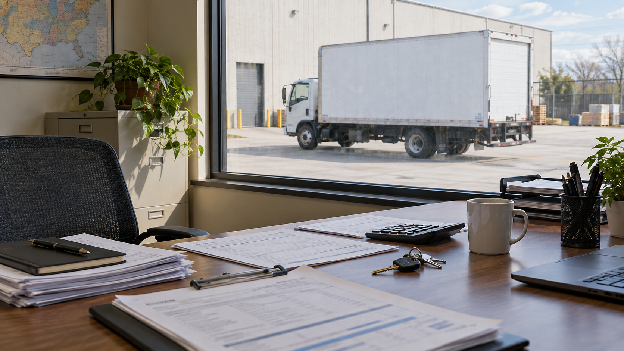
I wouldn't give every failed business the same diagnosis. But these are the weaknesses I'd examine before trusting a startup budget.
Building the business around promised gross. Recruiters sometimes repeat numbers supplied by management. I've seen that from inside the process. Work backward from realistic miles, freight revenue, and all charges; a confident delivery doesn't make a forecast dependable.
Spending the operating cash on the truck. Imagine starting with $4,000 available, then facing a $3,000 repair. You're left with $1,000 for fuel, bills, and getting back to work. The truck may be repairable while the business is still short of cash.
Missing the cost of waiting. In a hypothetical setup spending $2,500 weekly with payment arriving after four weeks, approximately $10,000 must be funded before the first receipts. That is a cash-flow gap, even if every invoice eventually gets paid.
Accepting deductions without understanding them. In recruiting, I saw weekly and monthly charges presented separately, making the total harder to follow. The fuel-card arrangement I question most is mandatory use with no clear explanation of discounts or fees. Those are carrier red flags, not small administrative details.
Treating compliance as paperwork for later. New interstate carriers enter an 18-month monitoring period and face a safety audit. Required records and maintenance cannot wait until someone asks for them.
My test isn't whether the first week looks profitable. It's whether the plan survives a repair, a late payment, and a weaker week without depending on another optimistic promise.
Leased-On vs Your Own Authority
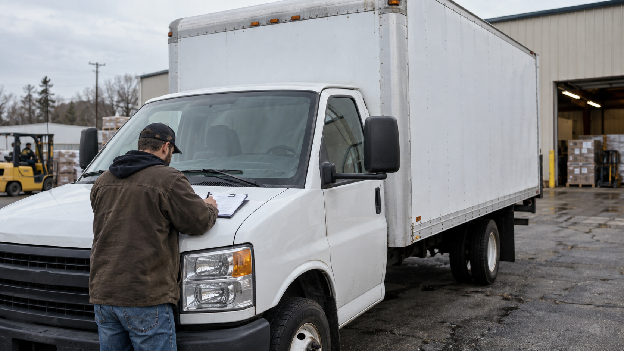
Leasing on means operating your truck under another carrier's authority through a compliant arrangement. It is not the same as renting a truck. FMCSA permits this when the applicable leasing requirements are met.
I wouldn't dismiss leasing on as “not really owning a business.” I'd compare what the carrier provides with what it charges: access to suitable freight, dispatch support, administrative work, and a settlement you can verify.
Before signing, inspect the percentage or mileage formula, fuel costs, insurance charges, escrow, equipment deductions, and exit terms. Our percentage-vs-CPM comparison explains why the headline rate cannot answer that question alone.
For covered leases, federal rules require written compensation and charge-back terms and specify the carrier's public-liability insurance obligation. They also require clarity about responsibility for other coverage. Don't read “insurance included” as confirmation that every loss is covered.
With your own authority, you operate as the carrier rather than relying on another carrier's authorization. I'd budget time for finding customers, quoting, collections, compliance, and maintenance—not just driving.
My preference would depend on readiness: verified freight opportunities, sufficient operating cash, and the ability to manage those responsibilities. Your own authority should solve a business problem, not simply sound more independent.
You don't need the biggest truck or the most ambitious revenue target to start. You need a specific job for the equipment, costs you can explain, and enough cash to stay selective when the first offer is poor.
Before spending, verify the freight, inspect the truck, quote the insurance, and understand the operating arrangement. A box truck business starts making sense when the work supports the truck—not when buying the truck becomes the plan.